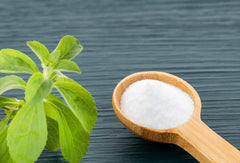
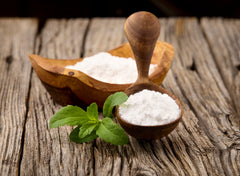
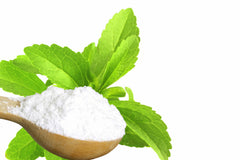
For food and beverage manufacturers, the shift toward natural, zero-calorie sweeteners is no longer a "clean label" trend, it’s a market mandate. However, formulating with stevia glycosides like Reb A, Reb D, and Reb M presents a unique set of challenges. Success doesn’t just depend on the recipe; it depends on the integrity, purity, and consistency of the supply chain.
When a single gram of stevia can replace 300 grams of sugar, even the slightest deviation in quality can ruin a production batch. Here is how to navigate the complexities of stevia procurement to ensure your brand delivers a consistent taste every time.
Purity Grades and the Science of Taste
The most common pitfall in stevia procurement is treating "Stevia Extract" as a single commodity. In reality, the sweetness profile is dictated by the specific glycoside and its purity level.
HPLC Verified Purity: The 95%–99% Benchmark
High-Performance Liquid Chromatography (HPLC) is the industry's "truth-teller." At Beimoobio, we categorize purity into three functional tiers:
-
Food-grade (≥95%): The gold standard for mainstream beverages and snacks.
-
Premium-grade (≥98%): Recommended for taste-sensitive formulations where even a hint of plant residue could interfere with the flavor.
-
Industrial-grade (≥90%): Best suited for personal care products like toothpaste.
Controlling the "Minor" Glycosides
While Reb A is the most abundant, and Reb M is the "gold standard" for sugar-like taste, a crude extract contains other glycosides like Reb B, C, and E. If these are not strictly controlled, they can introduce a lingering licorice-like aftertaste or bitterness. A reliable supplier doesn't just measure the primary glycoside; they manage the entire profile to ensure the "off-notes" are neutralized.
Managing Isomerization and Degradation Byproducts
Stevia is prized for its thermal stability, withstanding baking temperatures up to 180°C and pasteurization at 121°C. However, poor extraction techniques can lead to isomerization or degradation byproducts. Ensuring your supplier uses gentle water-and-ethanol extraction (rather than harsh chemical solvents) preserves the molecular integrity of the steviol backbone.
Safety, Compliance, and Global Certifications
In the global marketplace, your ingredients are only as good as the paperwork behind them. Safety and compliance are the foundation of consumer trust.
Third-Party Testing: Heavy Metals and Microbial Limits
Because stevia is a plant-derived ingredient, it is naturally susceptible to environmental factors. Your quality protocol must mandate:
-
Heavy Metal Limits: Ensuring total heavy metals are ≤10 ppm.
-
Microbial Safety: Verification that the product is free from E. coli, Salmonella, and mold.
-
Residual Solvent Verification: Confirming that any ethanol or methanol used during purification has been stripped to safe, undetectable levels.
The Certification "Passport"
To reach a global audience, your stevia must meet diverse dietary and ethical standards. At Beimoobio, we prioritize:
-
Non-GMO Project Verified: Essential for Reb D and Reb M, which are often produced via bioconversion.
-
Kosher & Halal: Critical for entry into Middle Eastern and North American markets.
-
ISO 22000 / FSSC 22000: These certifications prove the manufacturing facility adheres to peak food safety management.
Batch Consistency and Documentation
The "sample-to-bulk" gap is a major pain point for R&D teams. A sample might taste perfect in the lab, but if the 1000kg bulk order varies by even 1% in purity, the final product's sweetness will shift.
The Role of the COA and HPLC Chromatogram
Every shipment should be accompanied by a batch-specific Certificate of Analysis (COA). Unlike a general specification sheet, a COA provides a "fingerprint" of that exact batch. Furthermore, requesting the HPLC Chromatogram allows your quality team to verify the specific concentration of Reb A, D, or M visually, ensuring there is no "drift" in sweetness intensity between January and June orders.
Traceability and Transparency
Full transparency means knowing exactly where your stevia comes from. China accounts for nearly 90% of the world’s stevia supply, with prime growing regions in Yunnan and Anhui. A transparent supplier can provide documentation tracing the extract back to its botanical origin, ensuring a secure and ethical supply chain.
Logistics: Protecting Quality from Factory to Warehouse
Stevia is a high-value, sensitive powder. Logistics management is where the physical quality of the product is either protected or compromised.
Moisture Content Limits to Prevent Clumping
Stevia is hygroscopic, meaning that it wants to absorb moisture. If the moisture content exceeds 0.5%, the powder will clump, making it difficult to meter in automated production lines.
-
Packaging: Look for vacuum-sealed aluminum foil bags with desiccant packs.
-
Storage: Quality is maintained for up to 24 months when stored in a cool, dry environment (2–8°C) with relative humidity below 60%.
Lead Times for Custom Purity or Particle Size Orders
Strategic procurement requires balancing inventory with lead times. While standard Reb A might be in stock for immediate 3-day shipping, premium bio-converted Reb M or custom particle size orders may require 2–4 weeks for production. Planning for sea freight (20–40 days) versus air freight (3–10 days) is a critical component of cost-saving logistics.
Partnering for Success
Selecting a stevia supplier is not just a procurement decision; it is a partnership that affects your product's flavor, safety, and bottom line. By focusing on HPLC-verified purity, rigorous third-party testing, and meticulous documentation, you can scale your production with confidence.
At Beimoobio, we provide technical support to ensure your transition to natural sweeteners is seamless. Whether you need a 1kg sample for a pilot run or a bulk 1000kg order for a national launch, we bridge the gap between complex science and reliable supply.
Would you like to see a batch-specific COA for our Reb M or Reb D? Contact us today to optimize your next formulation.